
Greenville Tendinopathies Pain Relief
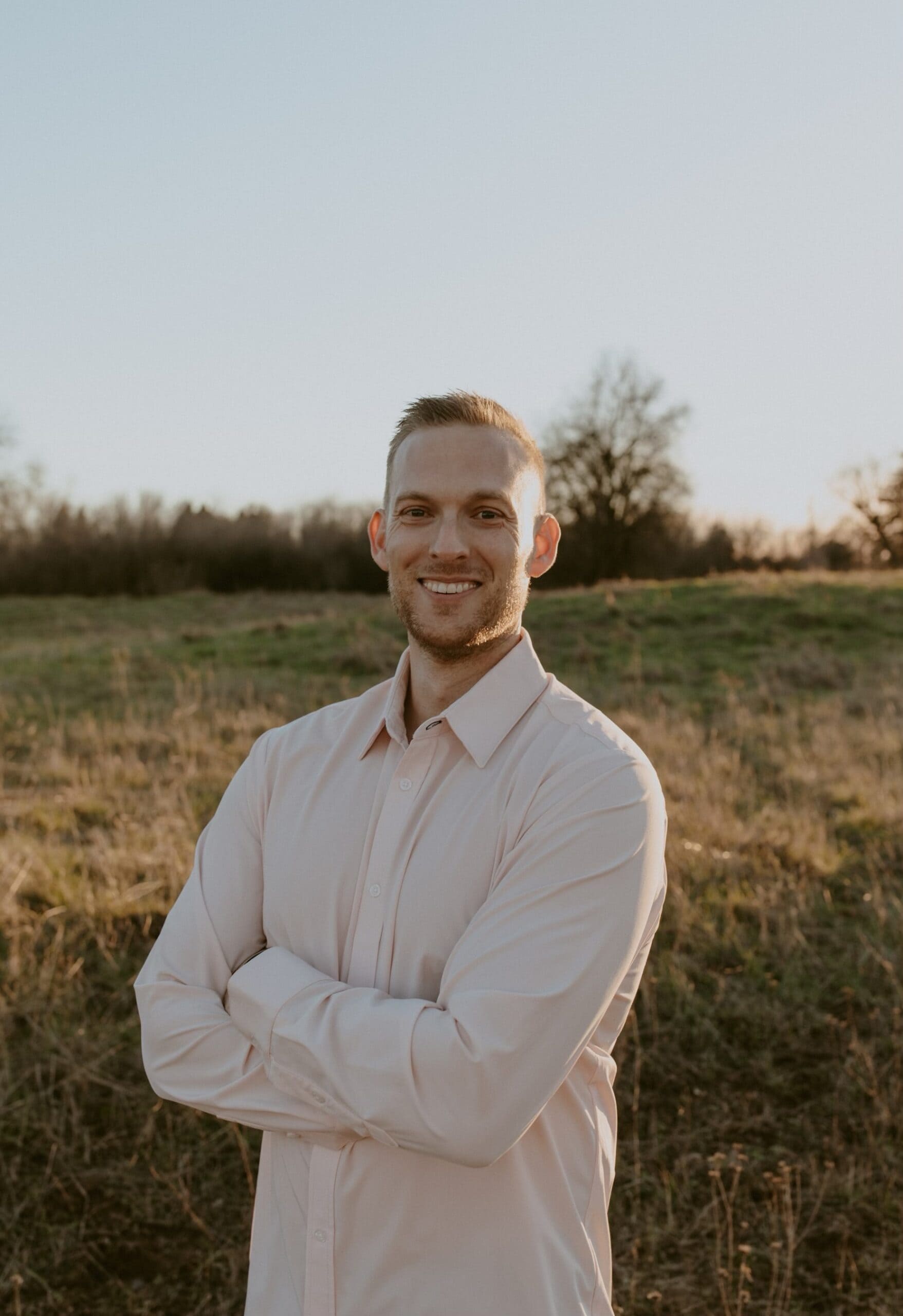
Michael Hansen DPT
Physical Therapist
Living with tendon pain changes everything. Whether you’re struggling to lift your morning coffee due to tennis elbow, wincing when you walk upstairs because of Achilles pain, or dealing with persistent shoulder discomfort during overhead activities, tendinopathies can rob you of the simple joys in life. At Active Physical Therapy in Greenville, our dedicated team understands how frustrating tendon conditions can be and specializes in providing effective, lasting relief that gets you back to doing what you love.
Our approach combines evidence-based treatments with compassionate care, helping patients throughout Greenville County overcome tendon pain and regain their active lifestyles. From weekend warriors to grandparents who want to keep up with their grandchildren, we’ve helped countless individuals find freedom from tendon pain through personalized treatment plans designed specifically for their needs.
Comprehensive Tendinopathies Pain Relief
Tendon injuries don’t follow a one-size-fits-all pattern, which is why our tendinopathies pain relief approach is carefully tailored to each patient’s unique situation. We recognize that the tennis player dealing with lateral epicondylitis has different needs than the runner experiencing Achilles tendinopathy, and our treatment plans reflect these important differences.
Our team takes time to understand how your tendon condition started, what activities trigger your symptoms, and what goals matter most to your recovery. This thorough assessment allows us to create targeted treatment strategies that address not just your current pain, but also the underlying factors that contributed to your condition in the first place.
The effectiveness of our tendinopathies pain relief comes from combining proven manual therapy techniques with progressive exercise protocols. We utilize hands-on treatments that reduce inflammation, improve tissue quality, and restore normal movement patterns. Meanwhile, our carefully designed strengthening programs help rebuild tendon resilience and prevent future problems.
Understanding Different Types of Tendon Conditions
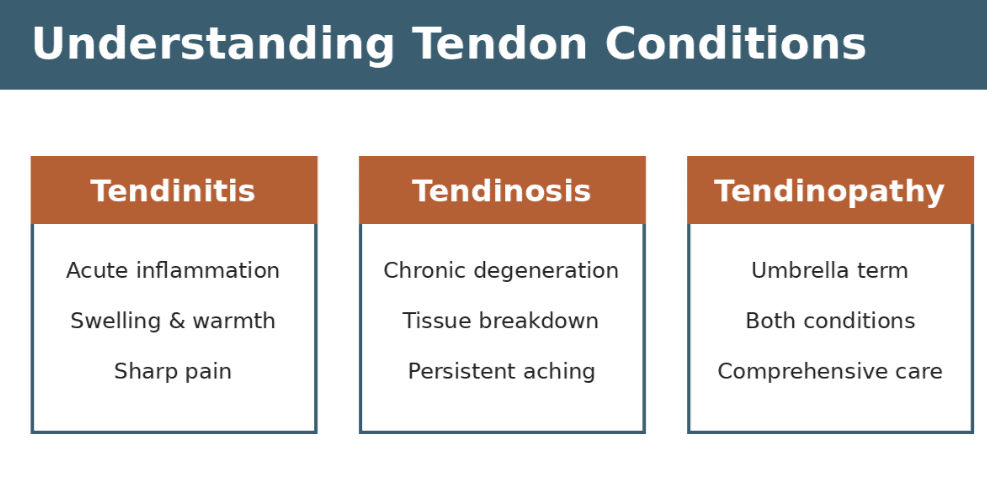
Tendinopathies encompass several related conditions that affect how your tendons function. Tendinitis involves acute inflammation of the tendon tissue, often resulting from sudden increases in activity or repetitive stress. You might notice warmth, swelling, and sharp pain during movement.
Tendinosis represents a more chronic condition where the tendon tissue itself has begun to break down due to repetitive micro-injuries over time. This condition typically develops gradually and may not involve significant inflammation, but causes persistent aching and weakness.
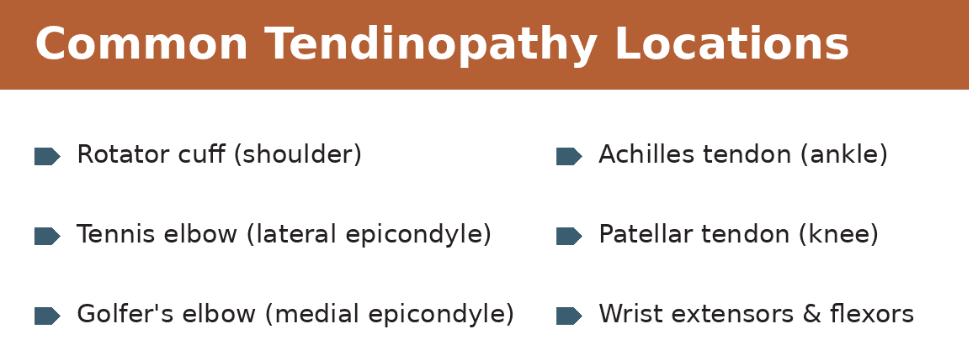
The term tendinopathy serves as an umbrella that covers both conditions, recognizing that many patients experience elements of both inflammation and tissue degeneration. Common areas we treat include the rotator cuff in the shoulder, the common extensor tendon at the elbow (tennis elbow), the Achilles tendon, and the patellar tendon at the knee.
Specialized Physical Therapy for Tendinopathies
Physical therapy for tendinopathies requires specialized knowledge about how tendons heal and respond to different types of stress. Our team stays current with the latest research in tendon rehabilitation, ensuring that every patient receives the most effective treatments available.
The foundation of our physical therapy for tendinopathies begins with a comprehensive evaluation that examines not just the painful tendon, but your entire movement system. We assess how you walk, how you perform work-related activities, and how different movements affect your symptoms. This whole-body approach helps us identify contributing factors that might be placing extra stress on your healing tendons.
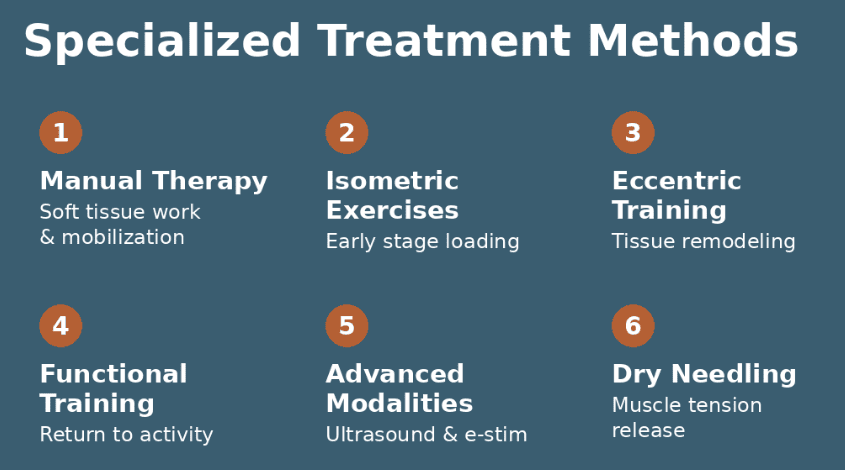
Our manual therapy techniques include targeted soft tissue mobilization, joint mobilization, and specialized tendon loading techniques that promote healing while reducing pain. We also incorporate dry needling when appropriate, which can be particularly effective for reducing muscle tension and improving blood flow to the affected area.
Progressive Exercise Programs
The cornerstone of effective physical therapy for tendinopathies lies in progressive exercise programming. Recent research has shown that tendons respond best to specific types of loading that challenge them appropriately while respecting the healing process.
We begin with isometric exercises that allow you to strengthen the affected tendon without moving it through a full range of motion. These exercises are particularly useful in the early stages of rehabilitation when movement might be painful.
As your condition improves, we progress to eccentric exercises, which involve lengthening the muscle while it contracts against resistance. Studies consistently show that eccentric training is highly effective for tendon rehabilitation, helping to remodel damaged tissue and build strength.
Finally, we incorporate functional training that prepares you for return to your specific activities. Whether you need to get back to playing tennis, lifting at work, or simply carrying groceries without pain, we make sure your tendon can handle these real-world demands.
Advanced Treatment Options
Active Physical Therapy offers several advanced treatment modalities that can accelerate healing and improve outcomes for patients with tendinopathies. Our team evaluates each patient individually to determine which treatments might be most beneficial.
Therapeutic ultrasound can help improve blood flow and reduce inflammation in the affected tendon. We also utilize electrical stimulation techniques that can help manage pain while promoting tissue healing.
When appropriate, we may recommend dry needling to address muscle tension and trigger points that often develop secondary to tendon pain. This technique can be particularly effective for patients with chronic tendinopathies who have developed compensatory movement patterns.
Frequently Asked Questions
How long does it take to recover from tendinopathies?
Recovery time varies significantly depending on the severity of your condition, how long you’ve had symptoms, and your individual healing response. Acute tendinitis may improve within 2-4 weeks with proper treatment, while chronic tendinosis can take 3-6 months or longer to fully resolve. Our team will provide you with realistic expectations based on your specific situation and help you track your progress throughout treatment.
Can I continue exercising with a tendon injury?
The answer depends on your specific condition and symptoms. In many cases, complete rest can actually slow healing, while appropriate activity can promote recovery. We’ll work with you to modify your exercise routine, identifying activities you can continue safely while avoiding movements that aggravate your condition. Our goal is to keep you as active as possible while allowing proper healing.
What can I do at home to help my tendon heal?
Home management plays a crucial role in tendon recovery. We’ll teach you specific exercises to perform between sessions, along with strategies for managing symptoms. This might include ice or heat application, activity modification techniques, and ergonomic adjustments to reduce stress on the affected tendon. We’ll also provide guidance on when to push through mild discomfort versus when to back off from activities.
Will I need surgery for my tendinopathy?
The vast majority of tendon conditions respond well to conservative treatment, and surgery is rarely necessary. Research shows that physical therapy is highly effective for most tendinopathies, with success rates often exceeding 80-90%. We’ll monitor your progress closely and communicate with your physician if your condition doesn’t respond as expected to conservative care.
How do I prevent tendinopathies from coming back?
Prevention focuses on addressing the factors that contributed to your initial injury. This includes maintaining appropriate strength and flexibility, gradually progressing activity levels, using proper technique during sports and work activities, and recognizing early warning signs. We’ll equip you with a comprehensive prevention strategy tailored to your lifestyle and risk factors.
Your Path to Recovery in Greenville
Active Physical Therapy has been serving the Greenville community with expert tendon rehabilitation for years. Our patients consistently tell us they appreciate our thorough approach, clear communication, and genuine commitment to their recovery goals.
Dr. Michael Hansen and our skilled team bring extensive experience in treating all types of tendinopathies. We understand that every patient’s situation is unique, and we take pride in developing treatment plans that address your specific needs and goals.
Located conveniently in Greenville, we’re here to help you overcome tendon pain and get back to living the active, fulfilling life you deserve. Don’t let tendinopathies hold you back any longer – take the first step toward recovery today.
What Other People Just Like You Are Saying About Active Physical Therapy In Greenville, South Carolina
- Shaundra P.
“Michael is the best! I have worked with Michael for over a year and the progress and growth shows inside and outside the gym. His knowledge and understanding of CrossFit performance allows him to connect and understand challenges and difficulties that we have and he works with us so we can keep going! 1000% recommend him for any PT need.”
- Lindsay S.
“My experience with Michael has fully exceeded my expectations. I originally reached out for shoulder pain and have since worked on knee pain as well. I went from minimal movement without pain to being able to do pushups again. There is a huge benefit and advantage in having a professional explain concepts, movements, and ensure the correct muscle groups are being activated.”
- Luke D.
“Michael helped me come back from double heel “fracture” (they were pulverized). His attention to detail and amazing hands-on care for my feet helped me get the flexibility and comfort and confidence I needed each session to make progress, start walking(!) and more. Now I understand what healthy walking looks like for me and my feet, and I am equipped to keep pushing for 100% recovery. We were doing (safe) box jumps last week, I didn’t expect to be able to do that!”
What We Treat...
If You’re Interested In Learning More About How We Can Help You, Click the Link Below: